What Separates Good Teams from Great Ones? Shared Leadership.
What Separates Good Teams from Great Ones? Shared Leadership. I have spent decades in boardrooms, on stages, and inside organizations of every size and industry. And one of the most consistent things I have observed is this: the teams that truly excel are not the ones with the most talented individuals. They are the ones where leadership is not hoarded at the top. They are the ones where leadership is shared. In my newest book, Leading High Performance Teams for Dummies, I make the case that shared leadership is not a nice idea. It is a business imperative. And the data backs it up. Leadership is Not a Title. It is a Practice For too long, organizations have operated under a flawed assumption: that leadership belongs to a select few at the top of the org chart. That model is not just outdated. It is costly. Effective leadership is not confined to title or authority. It is about influence, vision, and the ability to unlock the potential of every person on your team. In today’s workplace, where change is constant and disruption is the norm, relying on one person to carry all of that is a strategy for stagnation. High-performing teams understand something that average teams do not: leadership is most powerful when it is shared, distributed, and cultivated at every level. The Research is Clear. The Center for Creative Leadership reports that teams embracing shared leadership generate 23 percent higher innovation and demonstrate significantly greater agility during times of disruption. Why? Because when leadership is shared, the responsibility for success is spread across many shoulders. It creates a collective commitment to the mission rather than reliance on a single person at the top. McKinsey’s 2024 research on organizational agility found that leaders in fast-moving organizations reported 2.1 times higher operational resilience and 2.5 times higher financial performance than their slower-moving peers. That is not a marginal difference. That is a competitive advantage. What Shared Leadership Actually Looks Like One of my favorite real-world examples is W.L. Gore, the company behind Gore-Tex. Gore intentionally minimizes hierarchy and operates on what they call a lattice structure, where employees step into leadership roles based on expertise and passion rather than rank or title. The result? Breakthrough innovations and a track record of resilience in volatile markets. I have also had the opportunity, as an author for Microsoft’s LinkedIn Learning, to observe Microsoft’s culture firsthand. Their CEO shifted the organization from a competitive, siloed environment to one rooted in empathy, collaboration, and a growth mindset. The results were accelerated market growth, increased innovation, and a dramatic improvement in employee morale. These are not coincidences. They are the direct outcomes of making shared leadership a cultural value rather than a management strategy. Three Ways to Build Shared Leadership on Your Team Shared leadership does not happen by accident. It requires intentional action. Here is where to start: Delegate authority, not just tasks. Empower individuals to make real-time decisions based on their knowledge and proximity to the work. When people feel trusted, they show up with greater ownership and confidence. Decision rights should be driven by expertise, not hierarchy. Create rotational leadership opportunities. Allow different team members to guide projects, lead meetings, and represent the group in cross-functional forums. When people experience leadership from a new vantage point, they become more invested in collective success. Celebrate collective wins, not just individual stars. Too often, organizations spotlight individual performers while overlooking the power of the team. High-performing teams tell the stories of how different members stepped forward at critical moments, how expertise from unexpected places solved complex problems, and how shared responsibility accelerated progress. The Mindset Shift that Changes Everything At its core, shared leadership shifts the mindset from “me” to “we.” And that shift changes everything. When leadership is fluid, based on the situation and the skill set required, team members are more willing to step up, take initiative, and own results. When people see that their contributions matter beyond their job description, they bring more creativity, more commitment, and more accountability to everything they do. As I often remind leaders: teams are not simply collections of talent. They become high-performing when the right conditions are created. Shared leadership is one of those non-negotiable conditions. The question is not whether your team has leadership potential. The question is whether you are creating the conditions for it to emerge at every level. That is the real work of leadership today. Dr. Shirley Davis is a global workforce expert, executive coach, and bestselling author. Her newest book, Leading High Performance Teams for Dummies, is available now.
Finding Your Compelling Why: A Conversation with Dr. Shirley Davis
In this episode of Resilience Unravelled, Dr Russell Thackeray chats with Dr. Shirley Davis, a 30-year HR professional and life coach. Dr. Davis discusses the significance of being intentional about one’s environment, the importance of finding one’s ‘compelling why,’ and the impact of diversity, equity, and inclusion (DEI) in workplaces. She shares her journey of building a global consulting business and her experiences managing the challenges and rewards of being in the ‘sandwich generation,’ caring for both her parents and her daughter. Dr. Davis also talks about her foundation, which supports single mothers with resources for education and entrepreneurship, and underscores the need for robust leadership to create fulfilling and inclusive workplaces. The episode concludes with information on how to connect with Dr. Davis and learn more about her work and upcoming publications.
Finding Your Compelling Why: A Conversation with Dr. Shirley Davis
In this episode of Resilience Unravelled, Dr Russell Thackeray chats with Dr. Shirley Davis, a 30-year HR professional and life coach. Dr. Davis discusses the significance of being intentional about one’s environment, the importance of finding one’s ‘compelling why,’ and the impact of diversity, equity, and inclusion (DEI) in workplaces. She shares her journey of building a global consulting business and her experiences managing the challenges and rewards of being in the ‘sandwich generation,’ caring for both her parents and her daughter. Dr. Davis also talks about her foundation, which supports single mothers with resources for education and entrepreneurship, and underscores the need for robust leadership to create fulfilling and inclusive workplaces. The episode concludes with information on how to connect with Dr. Davis and learn more about her work and upcoming publications.
Beyond the “What If” – Thriving Through the Storm
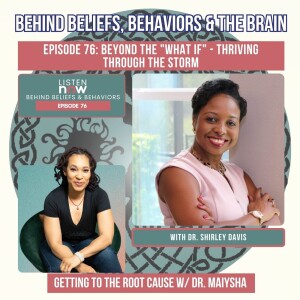
On this podcast episode of Behind Beliefs, Behaviors, & the Brain with Dr. Maiysha Clairborne, Dr. Davis dives into what it means to Live Beyond “What If”
What is the Sandwich Generation? How Does Ageism Play into Sandwich Generation Dynamics?
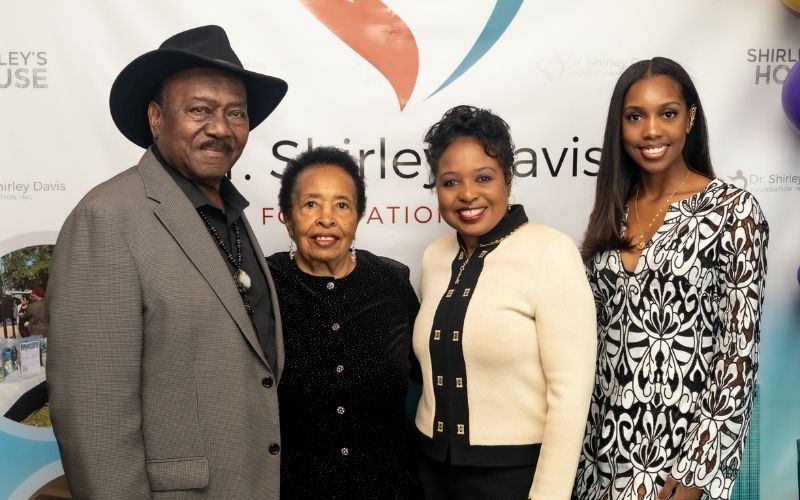
What is the Sandwich Generation? How Does Ageism Play into Sandwich Generation Dynamics? Check out this episode of Conscious Anti-Racism podcast, hosted by Dr. Jill Wener, MD, where Dr. Davis discusses the sandwich generation.
How Workers Should Prepare For the Job Market in 2022

One of the most dramatic storylines to come out of 2021 was the unprecedented state of the labor market. America learned terms like “the Great Resignation” and “the Big Quit.” Businesses that were eager to reopen after pandemic shutdowns couldn’t hire enough staff to meet the demand, no matter how much they offered to pay. Corporations across the country doled out big signing bonuses and imaginative benefits to average applicants.
Resources Available to Address Racial Inequalities
Given these unprecedented times of racial injustices that have precipitated the protests, outrage, and civil unrest in our country, we are aware of the emotional and psychological toll that these incidents can take on workers, businesses and communities. As CEO of SDS Global Enterprises, Inc. and throughout my 20+ years as an expert in the DEI space, I understand how important it is to take immediate action in times like these. In lieu of the recent events that have highlighted the inequities in our society, SDS Global continues to provide resources to respond and strategies needed to build more inclusive workplaces. These are some of the resources that we are providing to our clients to help navigate through these difficult and sensitive topics: Provide COACHING ON MESSAGING to your organization regarding the civil unrest and injustices that are happening in our nation. Facilitation of LISTENING TOURS with staff to create a safe space to allow for open dialogue and to identify opportunities and solutions for moving forward. KEYNOTES/WEBINARS via virtual platform on “Creating more Inclusive and Equitable Workplace Cultures” and “Tips for Tackling Taboo Topics” (such as Race/Racism, gender inequality, religion, etc). CONSULTING with SR. EXECUTIVES on strategies for addressing institutional and systemic racial inequities and other discriminatory practices. INDIVIDUAL COACHING to help leaders effectively lead and work across differences. Provide AUDITS and ASSESSMENTS on organizational culture to identify inequities. As leaders, it is our responsibility to instill and ensure an inclusive and high performing culture. Reassuring staff that they are valued, reaffirming that diversity and inclusion are core to your values and culture, creating safe spaces for sharing feelings, and offering solutions and resources on how to navigate emotionally-charged situations are all ways to help achieve this. We are a full-service provider with virtual delivery options that are available on multiple platforms. We stand ready to partner with you to provide expert consulting, facilitation, training, education, coaching, and strategy development. We look forward to hearing from you on how we can partner with your organization. Sincerely, Dr. Shirley Davis CEO of SDS Global Enterprises, Inc.